
aesterion
summer 2026

Chasing the Glimmer - Amelie Dimitre
Inspired by
Portrait of the Artist’s Wife, by Egon Schiele, 1917
She changed her shirt three, four times–
The room brightened and darkened,
And I chased the glimmer while begging her to hurry
At last, she settled
The sun,
hiding in buried places,
leapt to her blouse and the edges of her chin
Her arms sank into the volume of her skirt,
The fabric shuffling
And breathing out beneath her fingers
Her head rested gently on the collar of her sun-blouse,
And in this way, I reconstructed her
I was useless. I could not capture the softness
And stillness that lived in her cheekbone,
The retained intensity of her eyes–
even as her eyelids faltered,
The heavy fall of a curl loosened from a hasty pin
With failure hungrily scraping in my chest,
I looked beyond my canvas that held only a husk
Her pose never wavered,
expecting me to throw myself into the soundless pit again
I let myself hold the image of her hands,
enunciated by dripping color,
for longer than I had meant to
Looking Too Hard - Amelie Dimitre
Frosty spiderwebs clutch at her room’s corners
For months, they clutch at her room’s corners
Her eyes don’t see them any longer
Wrinkled hands caress silk dust on the table
Wrinkled hands smooth achy dust on the table
Fitting her baby in her fingerprint
She stands at the doorway, on cold tile
Hope stands at the doorway, hugging cold tile
Crackling leaves limp in, holding hands with pink buds
She keeps her ear to the windowpanes
Pressing her body to the windowpanes
The gasps of wind mock her little one’s voice
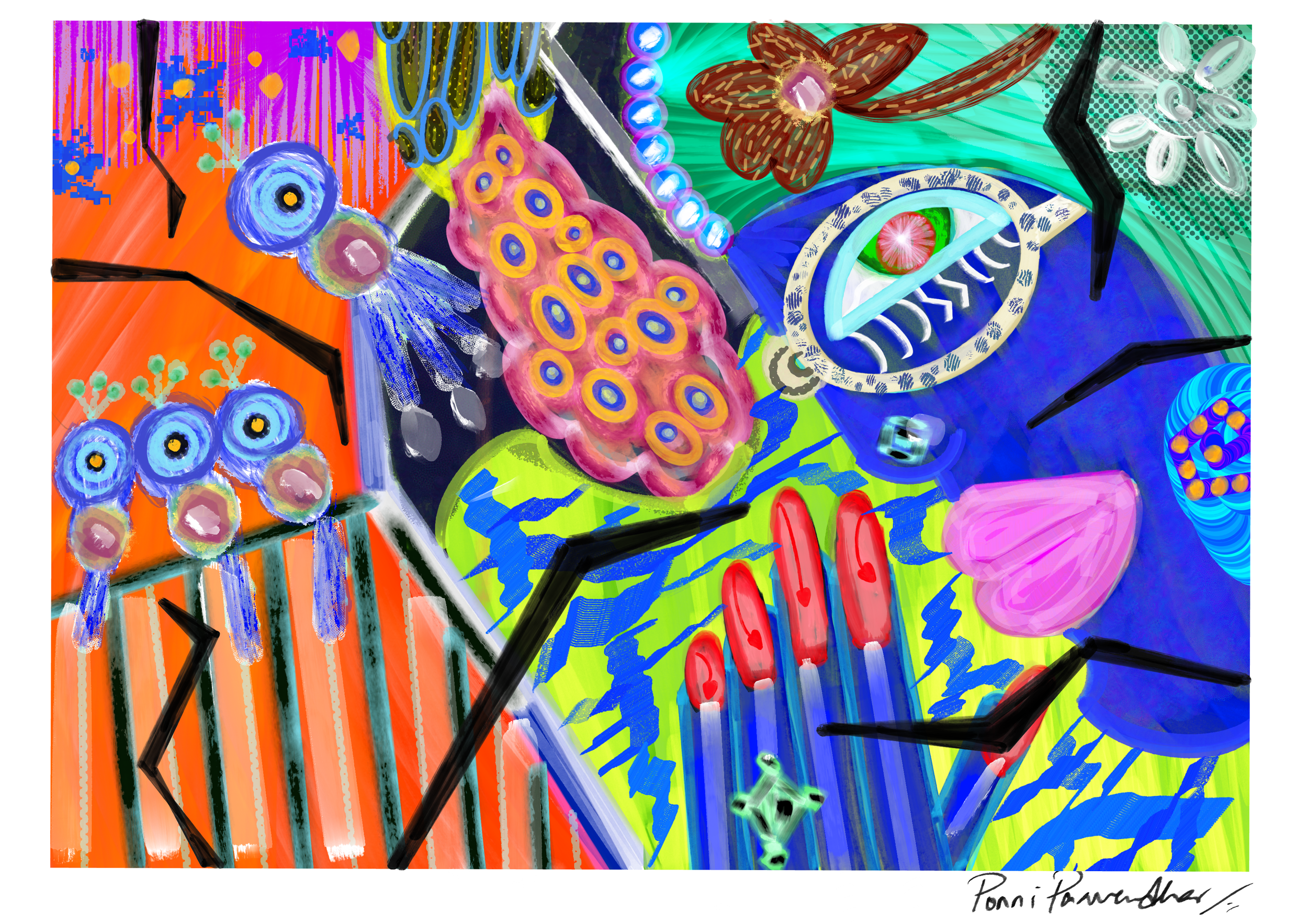
Bedroom Window - Tamizh Ponni VP
The Ridge Line - Dale Scherfling
She woke before the others, as she usually did. The fire had burned down to a shallow
bowl of ash. The goats stood tethered together, their breath faint in the cool air. She
stepped past the sleeping bodies of her people and climbed the low rise east of
camp—not all the way to the ridge line, just far enough to see it.
No one in her clan liked to stand against an empty sky. A person on a ridge was too
visible, too alone. The elders said it drew the eye of whatever moved in the night. She
didn’t know if she believed that, but she respected the logic: a figure on a ridge had
nowhere to hide.
Last night she had heard the elders whispering. They thought she was asleep. She
wasn’t.
A man had been seen on the far ridge. Walking alone.
Her people had a word for someone like that. It wasn’t a name so much as a warning. It
meant a person who had been sent away, or had left on their own, or had lost everyone.
A person without a circle. Someone the night could take.
She had lain awake afterward, listening to the camp settle. She tried to imagine a man
walking without belonging to anyone. How he kept warm. How he found water. How he
slept without a fire to mark his place in the world.
Such people were said to be dangerous. Or broken. Or carrying something that could
spread.
But she wasn’t sure. She had seen the elders fear things that never came. She had
seen them cling to stories that didn’t match the land. She had seen them contradict
themselves without noticing. She had learned, quietly, to make up her own mind.
Now, standing on the rise, she looked west. The sky was pale, the color of bone. The
ridge where the man had been seen was a darker line against the light.
She told herself she had climbed up here to look for weather. That was her task most
mornings. But she knew better. She was looking for him.
A movement caught her eye—a small shift of shape against the ridge. At first she
thought it was a goat that had slipped its tether. Then she realized it was too tall, too
still.
A man. Alone.
He stood just below the ridge line, careful not to break the sky with his shape. That told
her something: he knew the rule too. Or had learned it the hard way.
He carried nothing. No pack. No animals. His clothes were the same color as the
ground, as if he had been walking long enough for the land to settle on him.
She felt something tighten in her chest. Not fear. Something closer to recognition,
though she didn’t know why.
She glanced back at the camp. Everyone was still asleep. She was alone for this
moment—the only one awake, the only one seeing him.
The man turned slightly, as if listening to something she couldn’t hear. The wind shifted.
For a heartbeat she thought he might look her way.
She didn’t move.
Then he continued west, steady and unhurried, as if he had all the time he needed.
She watched until he disappeared behind the ridge. Only then did she breathe.
She didn’t know his name. She didn’t know his story. But she knew one thing with a
clarity that unsettled her:
A person could walk alone and not die.
The thought stayed with her as she walked back toward the camp. Someone would ask
if she’d seen anything. She would say no. She wasn’t ready to share him.
Some things had to be held quietly, until she understood what they meant.
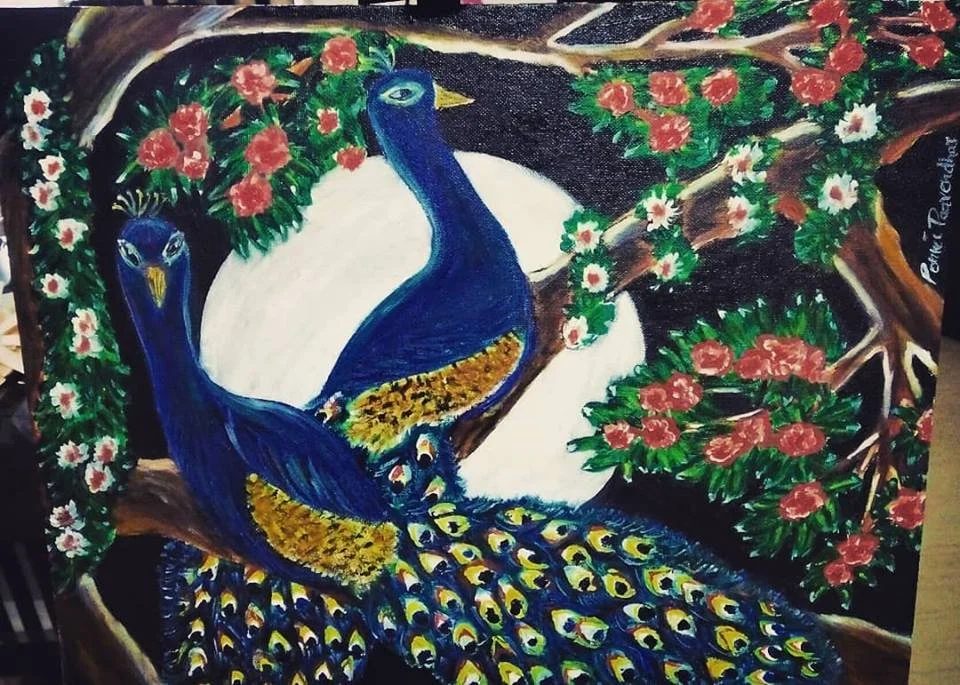
Nocturnal Love - Tamizh Ponni VP
The Birdcage - Sam Levy
The songbirds open
their mouths, their blade
lips pointed, and
out come spells cast
on other birds, music
that brings them closer and
makes them want
and soar.
Siren voices and feathers
still have their incantations
that once wrecked ships and men and lives
and lure others to come
nest and couple.
Set your watch by them.
They will come over the hills
every year to find each other,
their ribcages filled
with the life organ and the air
needed to make it move.
When my beak creaks open, a
hollowness erupts, like
the sound of a stone thrown
into a pit or of knuckles
rapping on a coffin.
My ribcage rattles, no
red fist
that opens and closes
to fill it, no
sweet wind to whisper to others
promises of forever
and ever.
Who taught the birds their songs?
Who squeezes their hearts?
They haven’t thought to ask.
As for me, I never learned
the one thing
no one else needed
to be taught.
Spoiled - Sam Levy
The blood rising gave
her lips a pin-
pricked pout.
Cherry cheek blush blossom,
olive and roses.
Eyes wide with
black camel lashes.
Eyes hard-hammered amber, made
softer with honey.
The dip of the waist and
flare of the hips
gave her curves you could
ride with your finger
tips, could slide down
over and over.
Glossy red ringlets
of juicy red apples.
The way she said,
yes and yes and yes.
Yes to greedy hands and
grimy hands, each
vying to yank
those curls, to grip
those curves.
Each claim saying,
mine. No, mine.
Until her dimples ached,
white becoming yellow.
And her bone house
creaked with age.
Then she exhaled
dead daisies, tongue
sour as wormwood. Black-
bellied rogue rot
from limb to limb, riddling all
with bruised fruit speckles.
Mottled muck
of green and gray, an
organ swamp, no
tissue borders.
Skirt besmirched
and caked with dirt.
Still she says yes,
dragging herself forward,
needing to know, when the
loving part starts.
The Virgin - Sam Levy
Like the stiff, stripped sleep
of the dead on steel—
whose intimacy
of guts is
held up to the light, whose
lips open—
she lies on the bed
still made.
Silver screen scenes
play back,
have shown her
what to do.
Be still, not
too still. Quiet but
still asking. Hold on
to the secrets and
then somehow
let them go.
In the room
that is too bright
every pore of her body’s
choice
weights her.
Her riddles untwine.
Her name will be lost
in the shuffle
of cells.
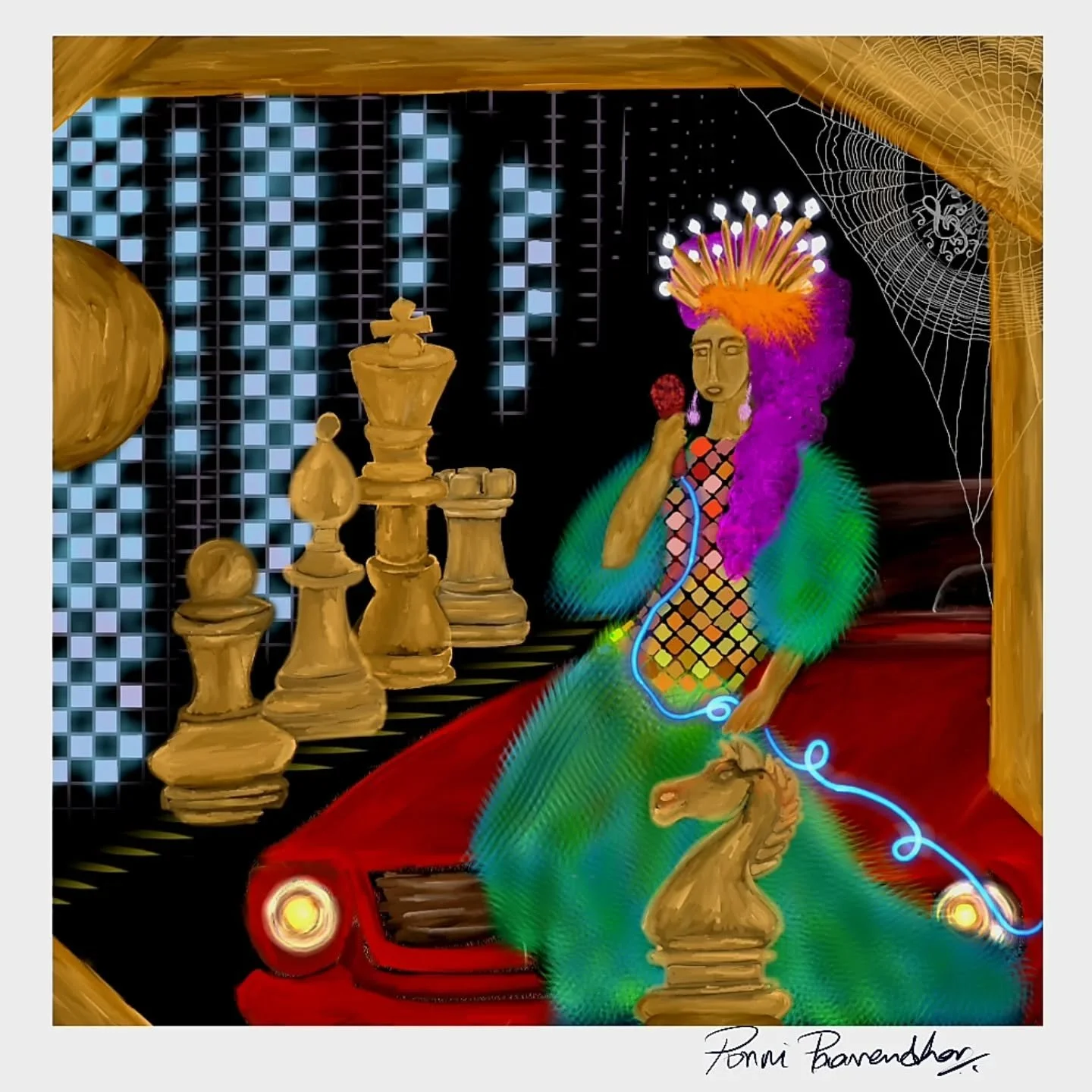
Mates - Tamizh Ponni VP
The Best Magician’s Worst Trick - Abigail Adams
I was eighteen, or maybe nineteen, at a house party. It was a friend of a friend’s
grandmother’s house, and we didn’t plan to stay for long. I remember it felt like a scene
out of a bad indie movie, sitting around a concrete table talking to people I only sort of
knew. The warmth of the night mixed with the scent of whatever alcohol the person next
to me was starting to annoy me. Turning to give my signal of ditching to my friend, I
heard a confused voice calling out my name. I connected the voice to the face of an old
friend from an old high school I had left before graduating. Apparently they had just
arrived as I was planning my great escape. A few people around us laugh at how
everyone in our hometown is connected in some way, and the old friend pulls a chair up
next to me. They look at me, I look at them. We both take in how we’ve changed from
age fifteen. I begin to open my mouth to drool some sort of small talk, but they’re talking
before I know it.
“Where did you go?” They ask me.
“Oh, I went homeschooled. I guess I forgot to tell everyone before I left.” I replied.
They look at me for a moment, “Sure, yeah, but you completely disappeared. No one
knew where you went. It’s like you were just gone. But you’re here now. You’re like a
magician.”
I laughed at that. My friend to the left of me however, agreed enthusiastically. She and I
had met at a summer camp as kids, then found each other at a different party when we
were seventeen or so. A newer friend across the table nodded along as well. Someone
makes a joke about how they’ll talk to other people about this. About my sudden absence,
my sudden return. The old friend makes a comment in which they call it my Great
Disappearing Act, and I laugh. I give the sign to my friend, I say my goodbyes, and we
leave. I haven’t seen the old friend since.
It’s Thanksgiving, or around that time anyways. I’m young enough to still love the
holiday but old enough to dread seeing parts of my family. This specific year, I’m sitting
on my Great Grandparents’ couch watching as everyone talks around me. My Great
Grandfather sits in his chair diagonally across from me, silent as well. Partially from a
lack of hearing, mainly from a life of few words. He catches my eyes from across the
room and frowns. I stick my tongue out back at him. He swats the air with his hand, and
looks away. I laugh at our private interaction, our silent conversation amongst the others.
This is our thing. We’ve always communicated without words to each other. He’d catch
me drawing, and my Father would come home with a stack of old art textbooks from him
to give to me. He’d notice my restlessness as a kid and suggest that we take a walk with a
nod of his head. Watch as I stared in awe at his old pocket watches, watched next how I
smiled as he took them out of their cases for me to hold. It was a mutual respect for
silence, or maybe just a mutual love for each other. Eventually we all sit at the small table
and eat. Games are played after, and my eyelids grow heavier and heavier. It’s dark out
as we say our goodbyes. I hug my Great Grandmother, but am gently corralled out the
door before I can do so to my Grandfather. I give a small wave from the steps looking
back, and he does the same. We do not say anything. He dies a month later.
I’m sitting in the passenger seat of my friend Kate’s car in July. I had just spent a week at
home with them and Eris, back in our collective hometown. Kate is behind the wheel, the
windows are down, and Depeche Mode is blaring through the speakers. She is driving me
back to my Aunt’s house, where I’ve been crashing. Leaving Eris’s neighborhood, I feel
like I’m a kid again. I can see the three of us as kids walking down the sidewalk in our
Halloween costumes. I can hear us splashing in the pool in the backyard. I can feel the hot
Florida pavement under my feet. Kate keeps driving, unaware that in my head she and I
are ten years old again. It hits me on this drive just how long I have known the two of
them. That to be in my twenties, and to have friendships that have lasted over ten years, is
rare. To have any friendship lasting more than ten years is rare. The two of us continue
casual conversation until we slowly creep into my driveway. Neither of us say much of
anything. I open my mouth to say goodbye, but close it as I notice Kate is on the brink of
tears.
“I don’t want you two to go. You’re the only people in the world I feel the most myself
around. I don’t want to lose that. I don’t know when we’ll see each other again.”
She drops it in my lap like a cat drops a dead bird. It’s beautiful, and it’s sad, and it’s
true.
“We’ll see each other again, I promise. I promise.” I try to comfort her as tears fill my
own eyes, the knowledge that it could be months or years until the three of us meet again.
She sniffs, “Okay.”
“Text me when you get home?” I ask.
She nods, I leave. I fly home the next morning.
A week ago I was visiting one of my closest and dearest friends, Aaron. Initially I was
supposed to stay for a day, but that changed to four rather quickly. The entire time was
spent around and within his social circle, this community of welcoming and lovely
people. I was smoking on his porch one of the nights, thinking about how easy it would
be to be a part of this life. To try and fit within this community, to have a life filled with
people around. How I would never be bored, or alone, how every goodbye would just be
until tomorrow rather than how it is now. About how easy it could be to hang up my top
hat, and lock away my magic wand. All I’d have to do was move. On the last night before
I left, we laid in silence next to each other. He put his hands in my hair, and asked me
what I was thinking about.
I answered, “About Eris. About introducing Eris to your friends. About Eris and I living
here, together. About living here. About being able to see you more often. About a lot of
things. What are you thinking about?”
“Nothing.” He replied.
I asked, “Nothing?”
“Nothing at all.” He shrugged.
The next day we got up, got dressed. We carried all my things to my car. I kissed his
shoulder, told him I loved him, and I left.
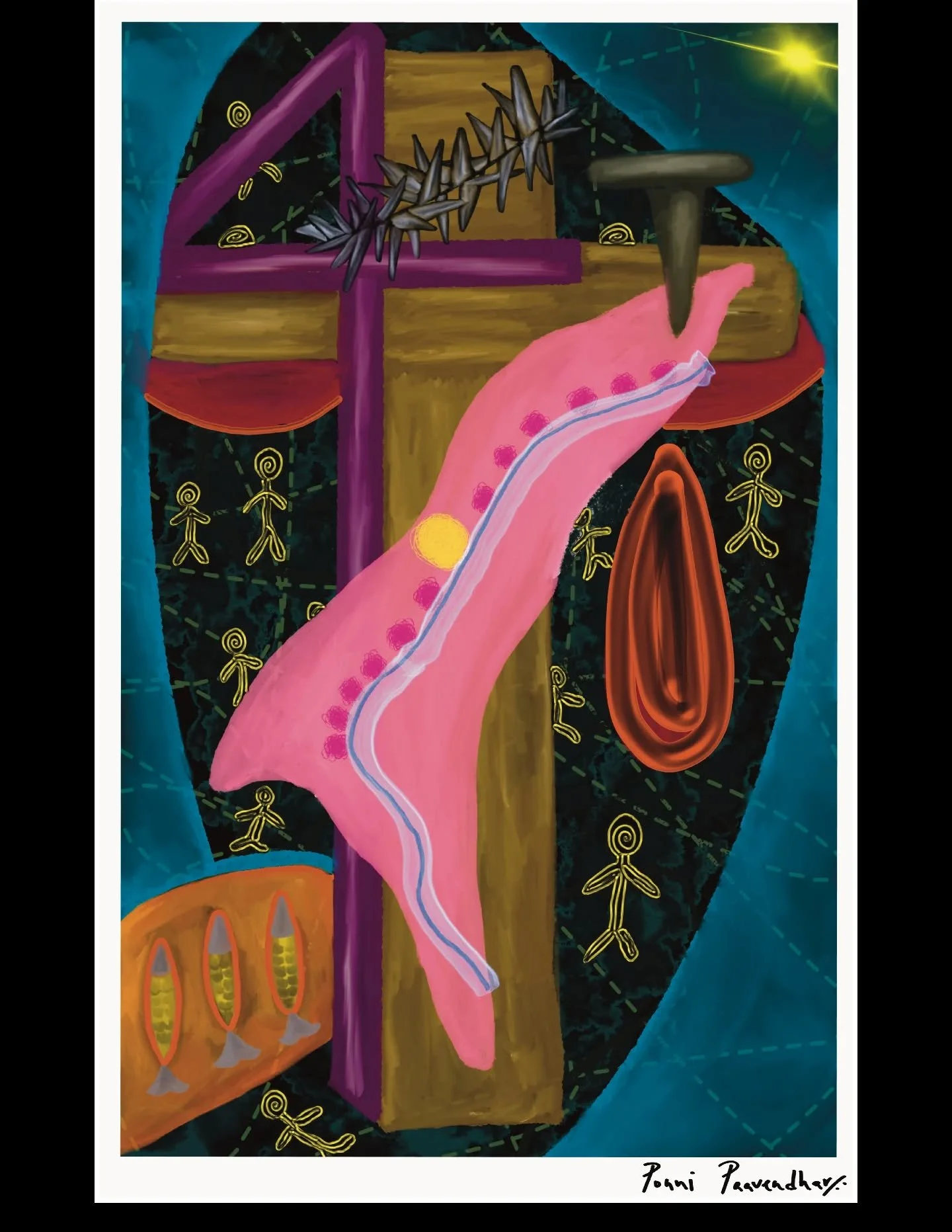
Rapture -Tamizh Ponni VP
Stagnation - James Croal Jackson
yanking the pull string of blackout
blinds in hot July my giant window
open the ocean-blue GetGo past
the intersection it is Sunday I have
not left today unemployed with
a hot splint in my skull passive
as A/C vents freeze me my place
in life I do nothing about it only
look past the plaid of screen past
trees in my face if I were a bird
that could fly I’d prefer to walk
an ostrich perhaps or emu that
could use its strong beak to draw
strength from earth from dirt
my studio is full of raw potatoes
and day-old coffee I will take
care of when it is time to go
“How long before we forget that it was ever otherwise?”
-James Croal Jackson
The climate crisis has already arrived.
-Alastair Gee and Dani Anguiano, The Guardian
Before the era of megafires
was an era normalized. Before
then, a different era normalized. Ad
infinitum. Death Valley approaches
a hundred thirty degrees and
we complain that our air
conditioner does not suffice,
so we buy a new one,
new ones built and used
until we buy new ones stronger.
Right now, in San Carlos, my sister
says the air around her is
fine– just a little bit smoky,
some fire on the periphery.
I don’t want to tell her to move
from the mountains. Where
would she go? My niece,
too, growing fast
as a wildfire.
Dozing - James Croal Jackson
closing my eyes at work
when no one is around
… legs dangling off the pier
at Point State Park …
water cup by laptop
uncovered, walking
voices in my road
a car braking–
the consciousness
splash
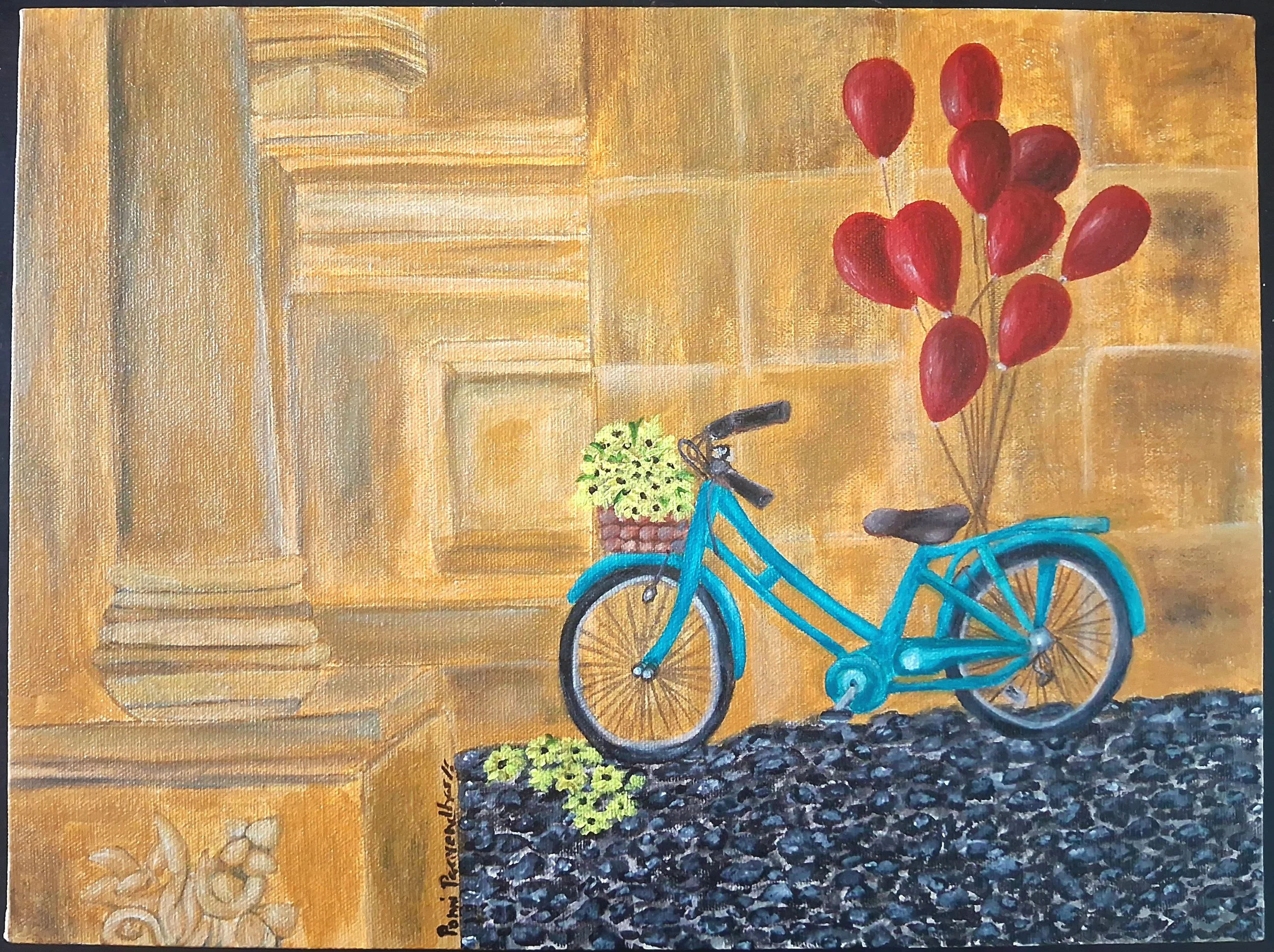
Meeting Spot - Tamizh Ponni VP
Music From Small Hands - Matthew Wherttam
One winter evening when I was still in elementary school, my mother began talking to me about
piano lessons. She wasn’t telling me I had to take them, but she was saying it would be a good
thing if I did. And she stood while she talked. Her eyes were on me, steady and focused, and my
father was standing beside her. He was silent, his eyes were dull and maybe even a little sad. If,
at that moment, both of them magically shrank way down, they could have been the two
figurines that go on top of a wedding cake. My mother told me I had been watching too much
TV after school. I told her it was too cold to be outside playing baseball, but when spring came
that’s what I would be doing. I had just gotten a new baseball glove.
The discussion did not last long or go well for me.
I don’t remember much about my first piano teacher. I believe she was short, thin and
had light hair of some sort. She was young. Not ugly, but not pretty, either. I can’t recall whether
she was married; but I would bet and even give good odds, she wasn’t, and I’d also bet she didn’t
have a boyfriend, and wasn’t dating. How she dressed and whether she wore lipstick or jewelry, I
can’t say. If she used perfume, she was never close enough for me to smell it. And there’s
nothing I can tell you about her voice except that she never shouted.
She must have made me sit up straight, shown me middle C, taught me how to read notes,
the sharps and the flats, and made me play scales; but, I can’t recall any of that. What I do
remember were the pink Snoball cakes and milk I would get before our lesson began. The pink
marshmallow and coconut flakes stuck to my teeth and tongue.
She would arrive with a metronome. A metronome with a triangular, dark-brown,
wooden base and a dark gray pendulum bar whose tip was bent. That metronome could have
fallen, been dropped or even attacked by one of her other students, but still it worked.
The edge of the piano bench bit into my legs and my teacher would sometimes twitch or
stare out into space while I played. When we were about to finish our lesson, she’d hand me
sheet music for a new piece. Always only one. And always an easy one. I can’t remember her
ever actually handing it to me, and I can’t remember her getting up and walking out our front
door. What I do know is that suddenly I would be alone in our living room wishing it were spring
and that I could play ball or have another pink, marshmallow Snoball cake.
I never practiced much. If it weren’t for my mother I wouldn’t have practiced at all. And
at my next lesson, if I couldn’t play my latest piece (a thing which never happened), my teacher
wouldn’t have cared. Once, when a bird smacked into the front window of our living room, I
jumped but she didn’t seem to notice.
The winter went on and on, so one weekend morning, I bundled up and went outdoors
with my new glove and a hardball. The wind was blowing and the hardball began to feel harder.
None of my friends were out, and the field near our school was covered in snow, and the longer I
stayed out, the closer I came to ruining that hardball and my new glove.
On the day of my next lesson, my mother told me I would be getting a new teacher who
turned out to be a tall, young man with thick black hair; hair that hung down to just above his
chin and then curled back up a bit. And though he was pale, he had a massive, muscular neck,
and broad shoulders. His cheeks bulged out and so did his eyes. He was like a balloon that was
about to pop, and he seemed to be in the middle of an important and distressing thought.
He had me play one of the pieces I had gotten from my first teacher. When I finished, he
told me it was too easy. Then he moved me off the bench and began playing a piece he had
brought. Angry notes flew from his fingers; and he lurched around and grimaced while he
played. Ours was an unassuming, upright piano, but under his hands, it might as well have been a
baby grand. He wore a long, black jacket and black pants and at first I believed that he was
wearing a tuxedo. But why would a piano teacher wear a tuxedo to a lesson? And why weren’t
there tuxedo stripes running down the sides of his pant legs? He wasn’t wearing a cummerbund,
a complicated tie or a frilly tuxedo shirt, and the shirt he had on was open at the top and spilling
out over the front of his black jacket, a jacket which had no tuxedo lapels and no tuxedo tails.
When he was done playing, it was my turn. The sheet music for the piece he had played
was in front of me. But there was no metronome. It was just him, the piano and me. And I began
playing. A metronome might have calmed me down or speeded things up or done something else
to make things bearable.
When our lesson came to a close, he pointed at the sheet of music and told me to
‘prepare’ it for our next lesson. I remember that word prepare.
I practiced like crazy that next week, as if he were my gym teacher— a big bully of a
gym teacher who would not tolerate mistakes. If could play the piece perfectly, maybe he would
crumble into dust and blow away–quickly and completely. But because the piece had tons of
notes and difficult fingering, I ran out of fingers again and again while trying to get through it. I
spent so many hours practicing, that by the end of the week all the notes and fingering had gotten
stuck in my head and I could play it by heart.
At our next lesson I played it. I kept my eyes straight ahead because that seemed to be
the respectful thing to do. I played it without looking at the notes or my fingers. I was in a trance.
I could have been in a crowd and I would have kept on playing unless someone happened to fall
on top of me. When I was done he didn’t seem especially pleased. He told me some things I had
done wrong. And he kept talking and talking, and breathing a lot at the same time like he was a
gear in some machine–a gear that was banging and rattling as it went around. I kept still. I
became numb and then began imagining I might be paralyzed. He was big, and his black jacket
and black pants were looking less and less like a tuxedo and more and more like the uniform you
would wear in a military parade. And I can’t remember saying a single word that entire lesson.
Before he left, he announced:
“You are capable. We don’t have to worry about that. But do more work on the piece you
just played. Work on the fingering. And here are two others I want you to ‘prepare’ for next
week. And try playing with emotion.”
Then he raced out our front door. He ran so fast I was surprised he hadn’t lifted off the
floor and into the air. And now there were three words I had gotten from him: capable, prepare,
and emotion.
That night at dinner I didn’t say much. After finishing my regular homework I looked at
those two new pieces. They had more notes and crazier fingering than the first one.
My mother, my father, my new piano teacher, and apparently the entire rest of the world
did not seem to care about how many hours I had practiced that past week or about all the
baseball I wouldn’t have time for in spring on account of this piano stuff. Those words capable,
prepare and emotion were stuck in my head and I couldn’t get rid of them.
How was I supposed to put emotion into these pieces? Was I supposed to make the notes
sound angry like he did? Or lurch around and move my lips silently like him? He had played
loudly and with lots of shaking. That’s for sure.
Until that winter, I had never even touched our piano. And whenever my mother and
father sat down and played duets, it sounded corny.
This giant, black-jacketed, pale, piano teacher surely had other students who were not
capable. I could have been one of them. But, by practicing so much, I had become capable; and
now I was expected to play three pieces, play them with emotion, and maybe even fly out our
front door when I was done. But was I really thinking those things or am I only making this stuff
up now?
I got undressed and into bed. My mother came into my room, kissed me, said good night,
turned out the lights and left. She seemed happy. Maybe she had heard that I was capable.
Maybe she liked how much time I had spent at the piano that week. I closed my eyes and began
to cry. At least I think I remember beginning to cry.
Why was the fingering on those three pieces so difficult? The composers were smart
enough to think up the music, they should have figured out easier fingering, as well.
I wondered whether my teacher might, at that very moment, be in a tuxedo, in front of a
grand piano and a huge crowd, in an enormous concert hall. Maybe a stadium. But people who
play in front of such crowds were surely far beyond giving lessons to little kids who wanted to be
elsewhere. Or, again, maybe I am just making up all this stuff. I do know the entire world
seemed to be whirling around me as I lay in bed. Gradually things began to slow down. I opened
my eyes. They were now used to the darkness in my bedroom. I could see the dim outlines of
things. The dim outlines of my new baseball glove.
Parade - Tamizh Ponni VP
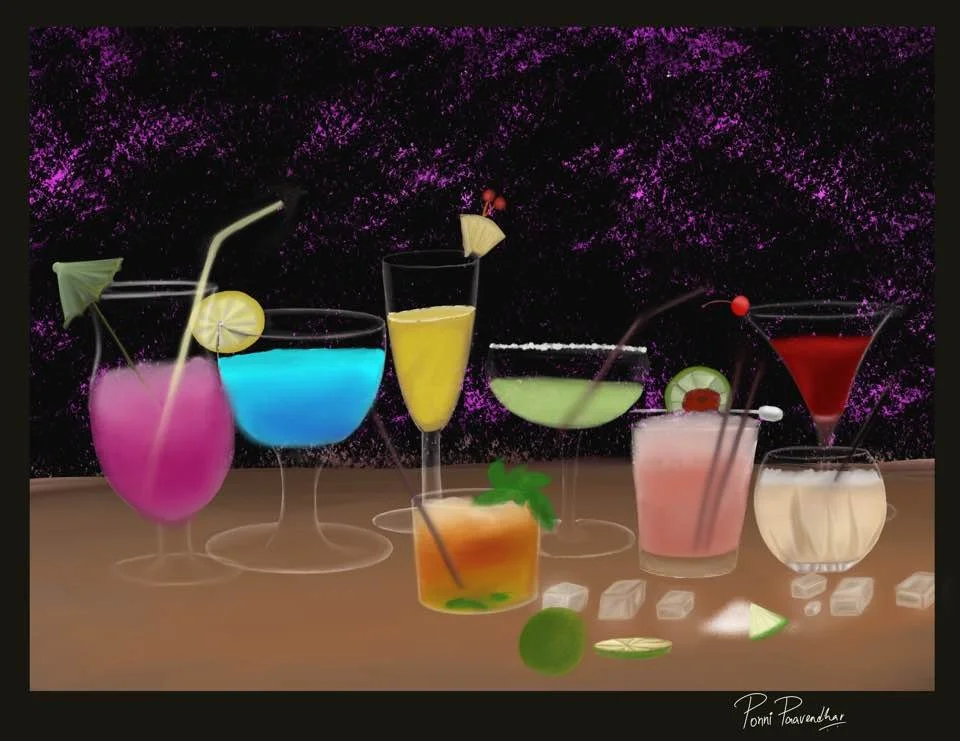
Helen - Sydney Weinkam
Helen of Troy has a face
twisted in thought, eyes
cold and harsh; opens
her mouth to scream
at the waves, hoping
the men who followed
her flowing hair
will turn blue and fill
with seawater. Helen thinks
of home, of running
on the sand. She faces
the horizon and sighs.
She did not ask
for any of this.
A Field in July - Sydney Weinkam
Deer travel together but die
alone, the headlight shine
grabbing the lonely one.
The rest run fast, afraid
to catch the light and know
what it is to be found
by people. In the dark,
foxes scream to life
in the dead grass
in the center of a plowed
field. A rabbit twitches
at my window but chooses
to stay. I watch it
silently, a trespasser walking
in a cold and dark home. I hold
my breath and wait for morning.
¡PUCHA MÁQUINA! - Giovanni Mangiante
it’s the late 1970s and my mom is holding a doll with her tiny hands
and walking around a barren, dictatorial
Peruvian ground “we were poor. we were very poor”
she would tell me decades after.
did she ever think back then that those tiny hands
would grow to hold mine, would grow to hold something
that thinks and feels and writes
and cries and screams and dreams
and demands and breathes
and needs, and can be so unfair
that God can’t answer why a son is cruel.
my mom and her tiny hands and feet
in the late 1970s
sharing her thoughts with her older brother
under the light of a kerosene lamp.
she doesn’t know that under her graying hair
is the same little girl from the late 1970s
with the tiny hands and the tiny feet
who decades later gave up her cries
and her demands, and her needs, and let go of her dreams
so I could have mine.
MY CAT’S AN ELECTRICIAN - Giovanni Mangiante
She’s void-furred and her eyes are expanding
glazed-doughnut-multitudes. Six months alive
make me wonder if the world got bigger and more fascinating,
or if I got softer after twenty-nine
years of crashing through windshields
of people, factories, and garbage.
She’s not supposed to know and she won’t know
that the many scratches over my arms
are the only scars I’m proud of wearing,
and that I didn’t know that wounds
could heal without shame.
She’s shown me parts of my house I didn’t know
existed before: squishy rubber stoppers
and wires pollute the floor without danger
“where did you get this from?” and I look
and look, and look,
but I can never find where they came from.
She’s a spy, a double agent, a mercenary,
and a political fugitive
wanted in forty-seven countries
that, one day, will cause my ass to hit the floor
because she dismantled the couch
over the course of four months.
THIS IS A HAPPY POEM - Giovanni Mangiante
I wrote it
on a piece of napkin
watching my dog
roll under the sun
with grace
and composure
until she found
the right spot
to be as wise as elephants
resting in the summer.
I found out today that
the secret to God
is in the glimmer
of her fur.
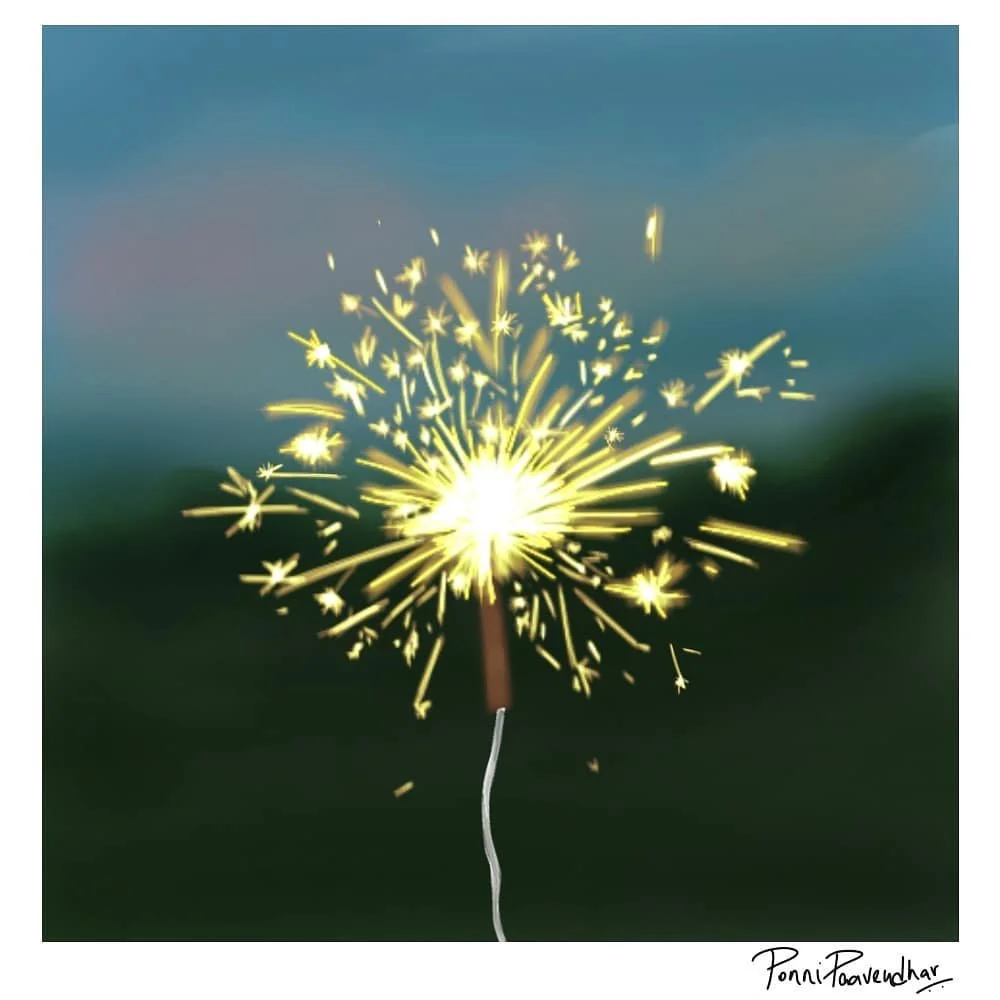
Life - Tamizh Ponni VP
Contributors
-
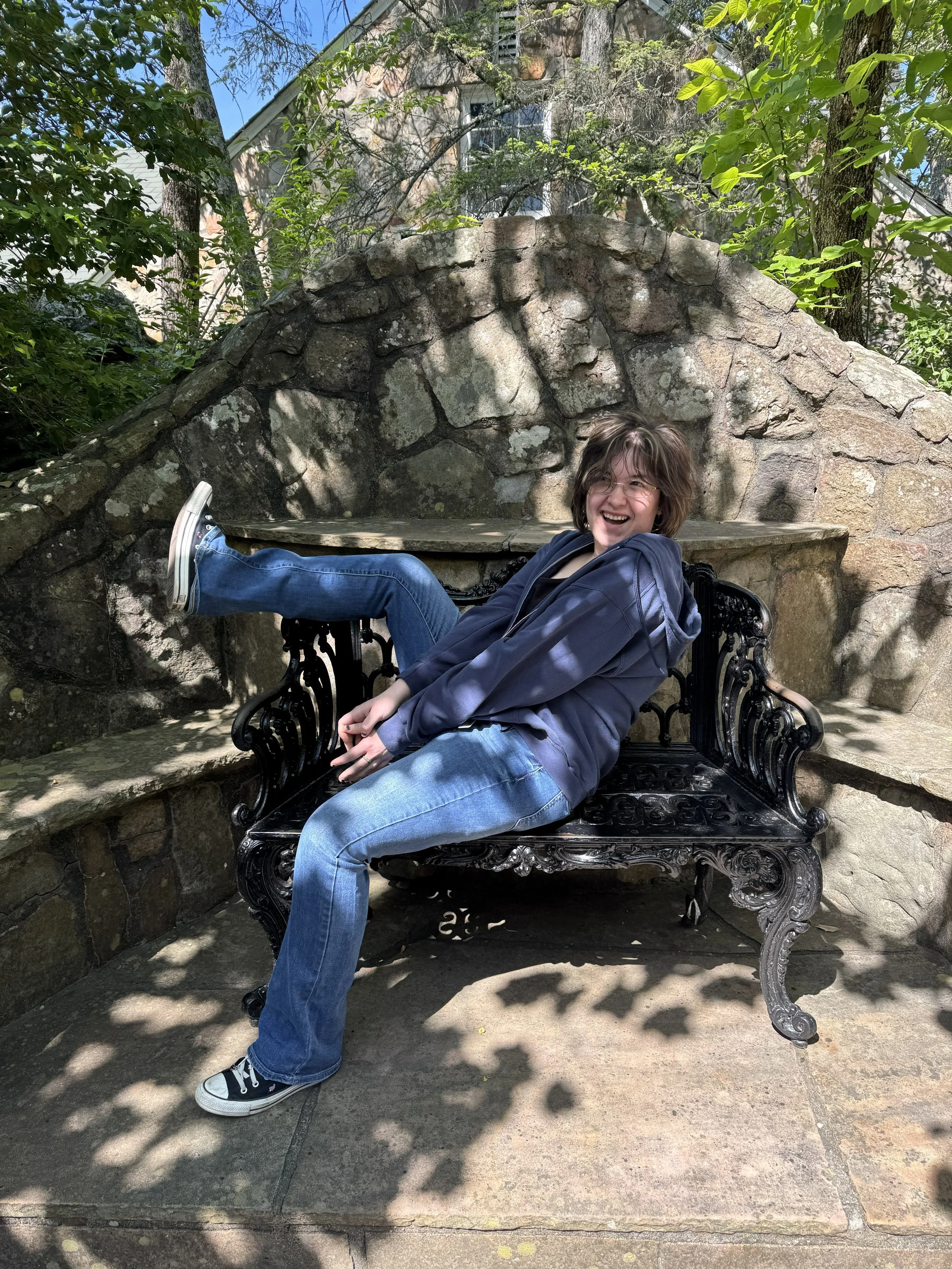
Abigail Adams
Abigail Adams is a self proclaimed court jester in the eyes of the universe. They are based in rural Appalachia, but originally hail from central Florida. Her hobbies include dancing and shining the bells on her funny hat. You can find her work on their co-run substack, "Life and Observations of a Waitress and Retail Worker." She hopes to change your life, if only for a moment.
-

Amelie Dimitre
Amelie Dimitre is an undergraduate student studying English with a focus in Creative Nonfiction, aiming to balance both writing and teaching in the future. Originally from Oregon, she lives in Massachusetts where she spends her time volunteering for youth writers, buying far too many books, and knitting tiny clothes.
-
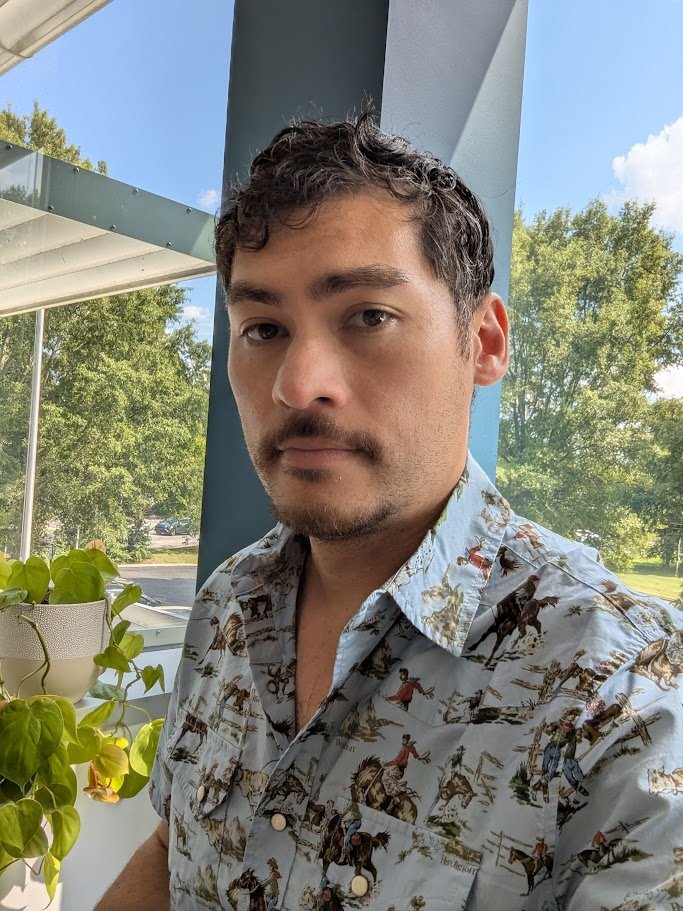
James Coal Jackson
James Croal Jackson is a Filipino-American poet working in film production. His latest chapbook is A God You Believed In (Pinhole Poetry, 2023). Recent poems are in The River, Mangrove Review, and Packingtown Review. He edits The Mantle Poetry from Nashville, Tennessee. (jamescroaljackson.com)
-

Sam Levy
Sam Levy is a writer living in Austin, Texas. She received an MLA in poetry writing from SEU in 2016 and an MFA in Creative Writing from SNHU in 2023. Her poetry has appeared in The Bond Street Review, Alternate Route, BarBar, Swifts & Slows, and Hobart.
-
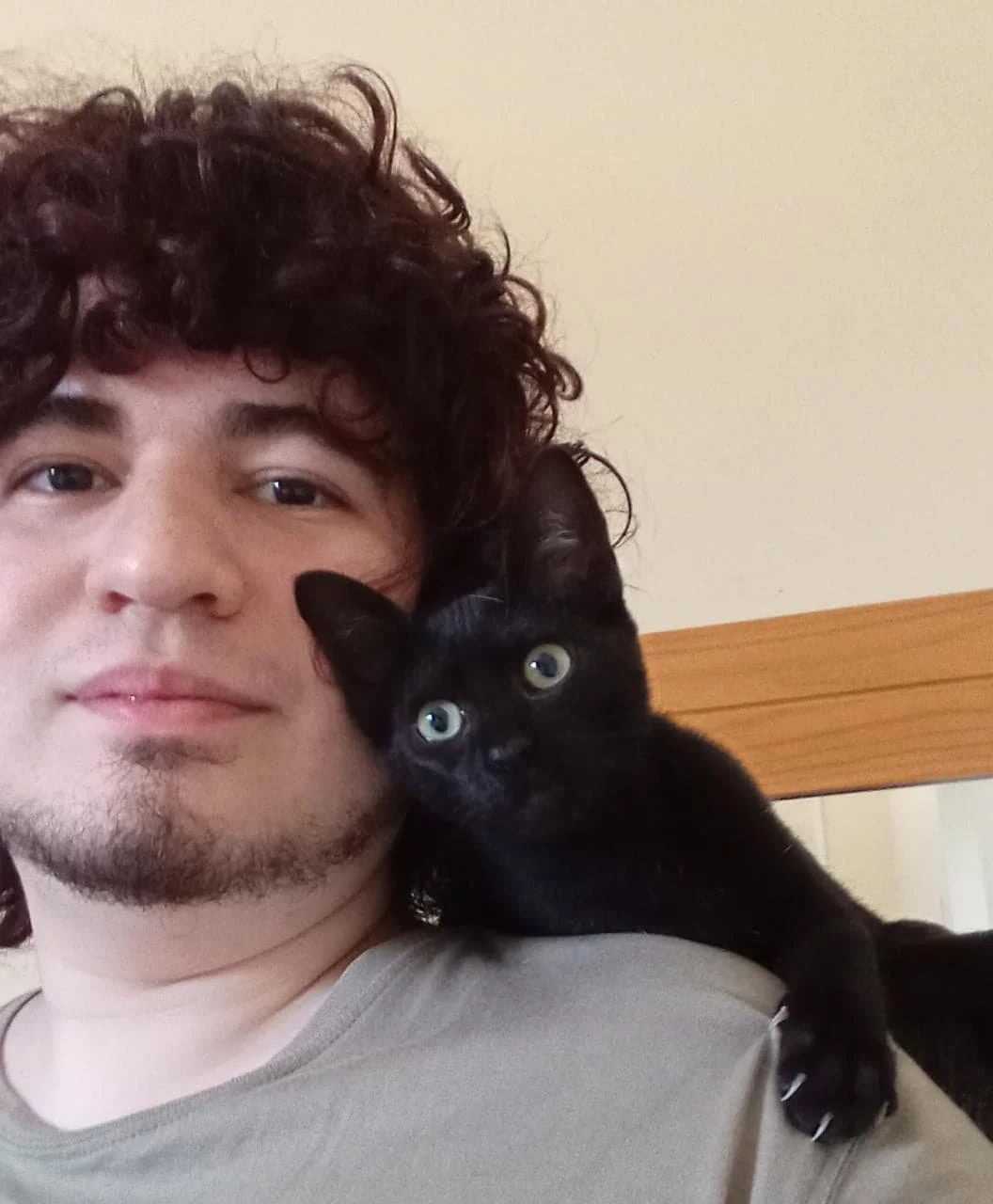
Giovanni Mangiante
Giovanni Mangiante is a poet and translator from Lima, Perú. His work appears in Chiron Review, Book of Matches, Open Minds Quarterly, among others. In Spanish, he can be found in Casa Bukowski, Kametsa, El Pez Soluble, and Nagari Magazine. His book “POEMS WRITTEN UNDER PERUVIAN WINTERS” (2021) was published in bilingual format by BookHub Publishing Group. He lives with his dog, Lucy, and his cats Sémola and Bianca.
-
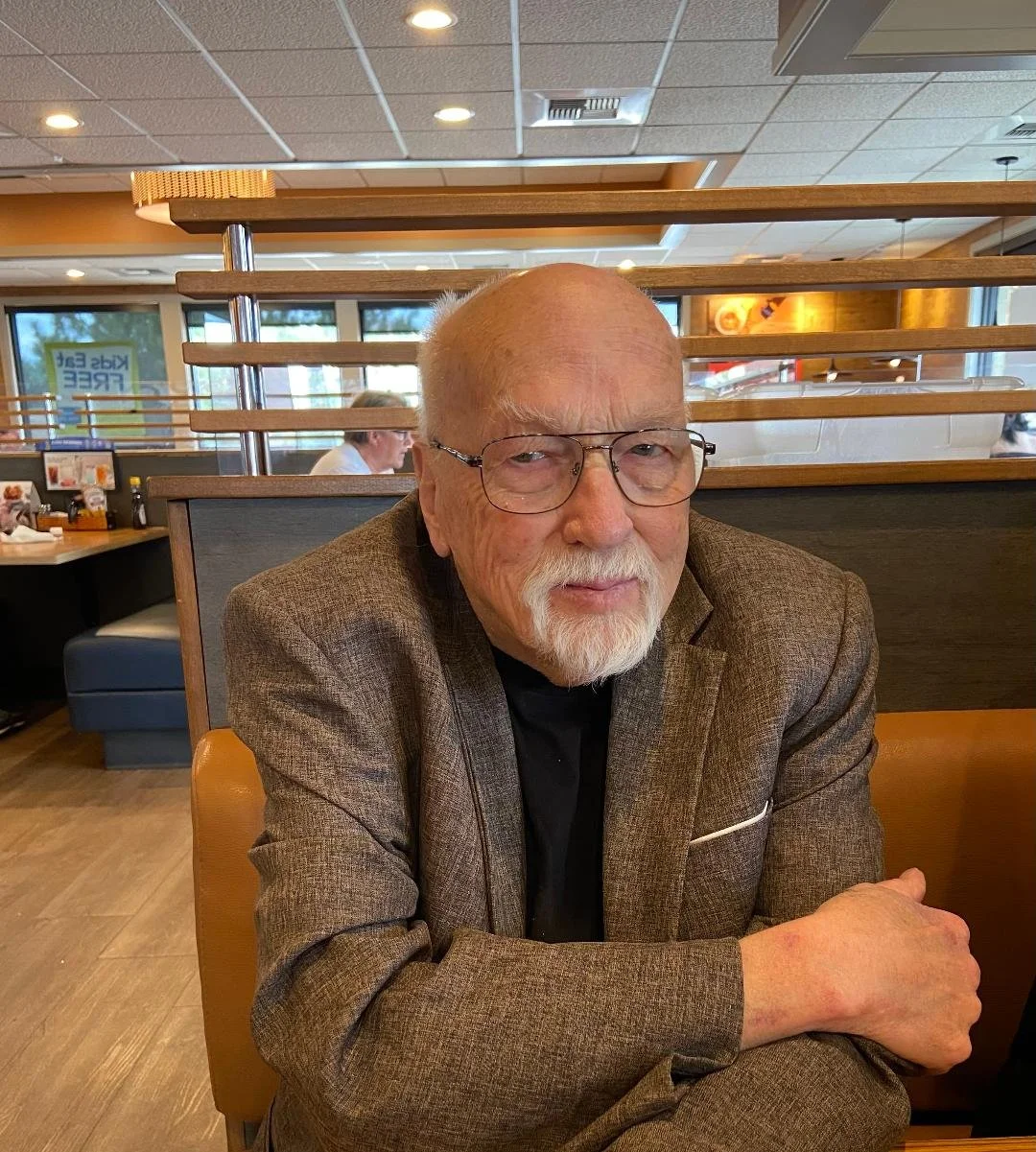
Dale Scherfling
Dale Scherfling is a fulltime writer/poet, creative writing instructor, and retired U.S. Navy photojournalist. A former newspaper sportswriter, editor, and photographer, he is the recipient of three U.S. Army Front Page Journalism Awards. His work has appeared or is forthcoming in publications including Chiron Review, Close to the Bone, Yellow Mama, San Diego Poetry Annual, Monterey Poetry Review, and Mangrove Review, among others. He has eighty accepted publications across literary journals and magazines.
-
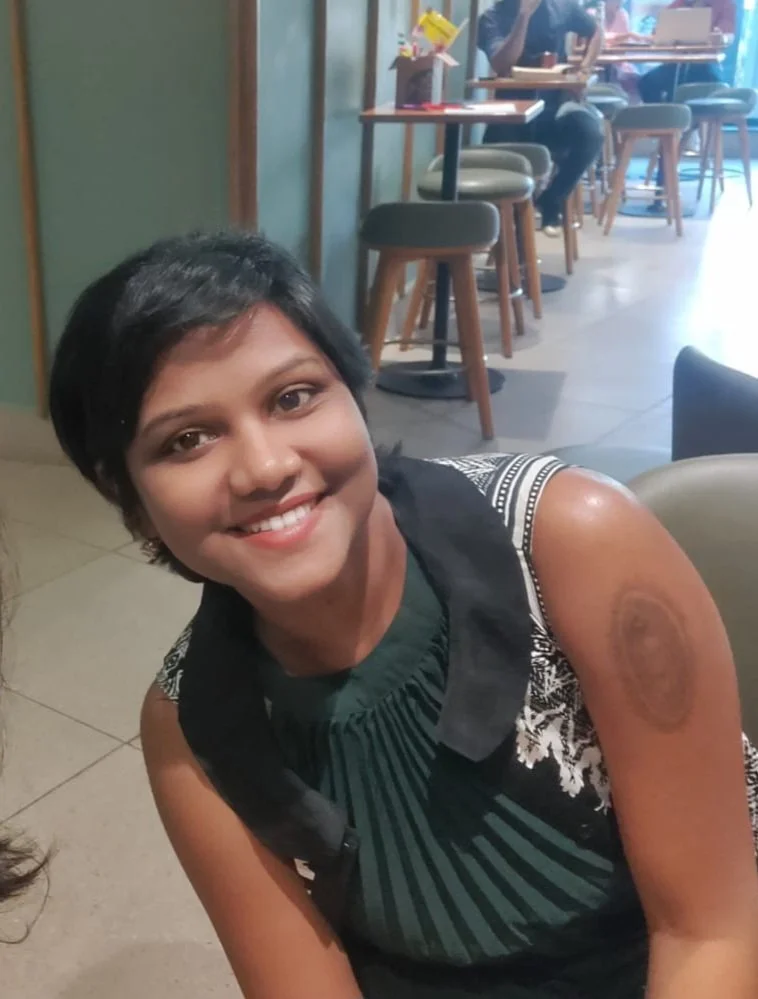
Tamizh Ponni VP
Tamizh Ponni VP is an ambivert and a stoic art buff who loves to express her skills through literature, visual arts and music. She is an IB educator and sees learning as a life-long process. Her stories were featured in 2 anthology books, "Mia" and "Varna". Tamizh's articles, poems and paintings have also been published in many digital journals and educational blogs. Tamizh spends most of her free time painting, reading, writing articles, stories and poems, playing piano and watching documentaries/movies.
-
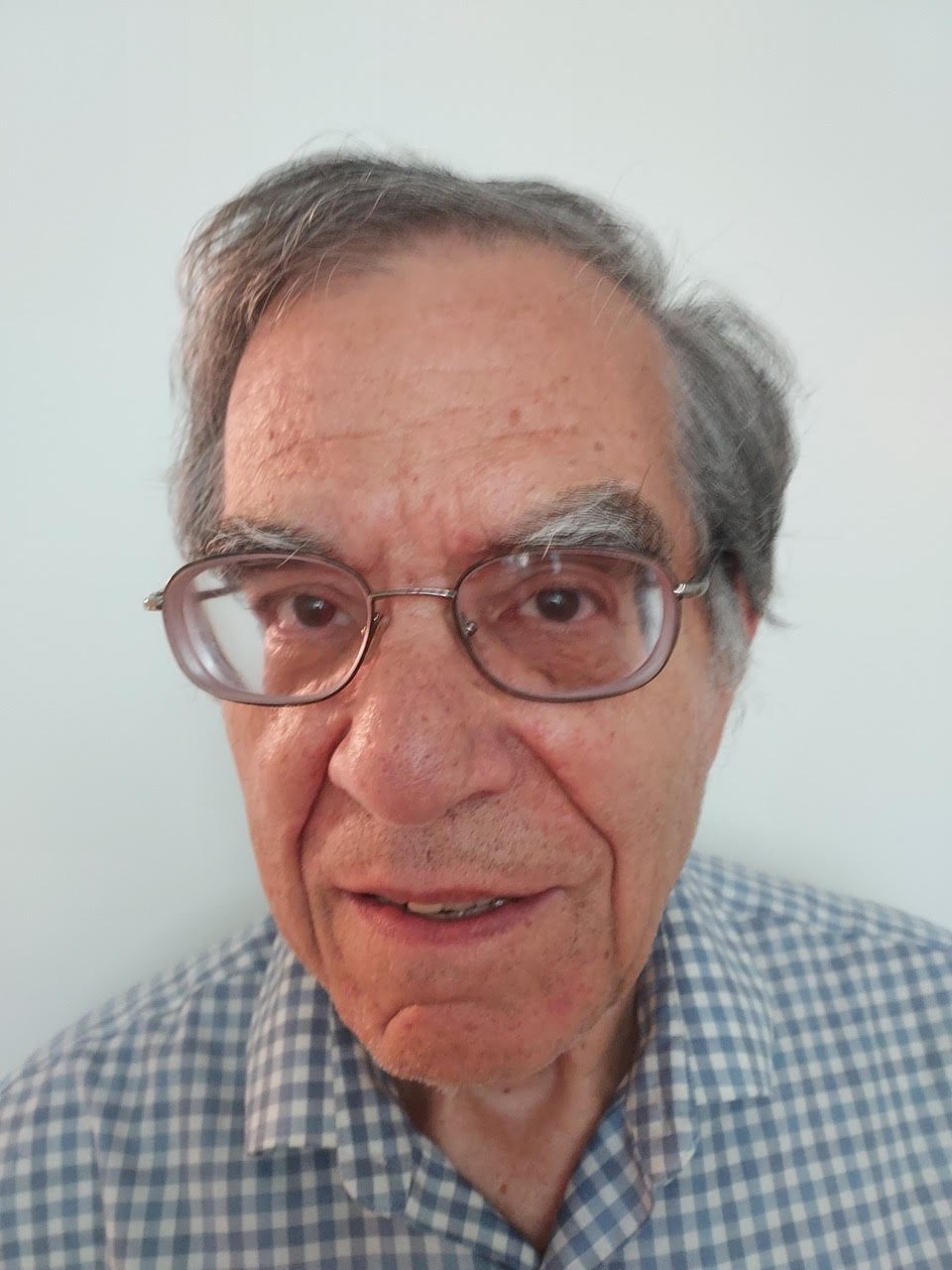
Matthew Wherttam
Matthew Wherttam has worked as a patent attorney, a chemist and a summer camp counselor. His short stories have been published in Fiction on the Web, Penmen Review, January House, Shadowplay, and many others. He shows his stories to his family and so far they have not disowned him.
-
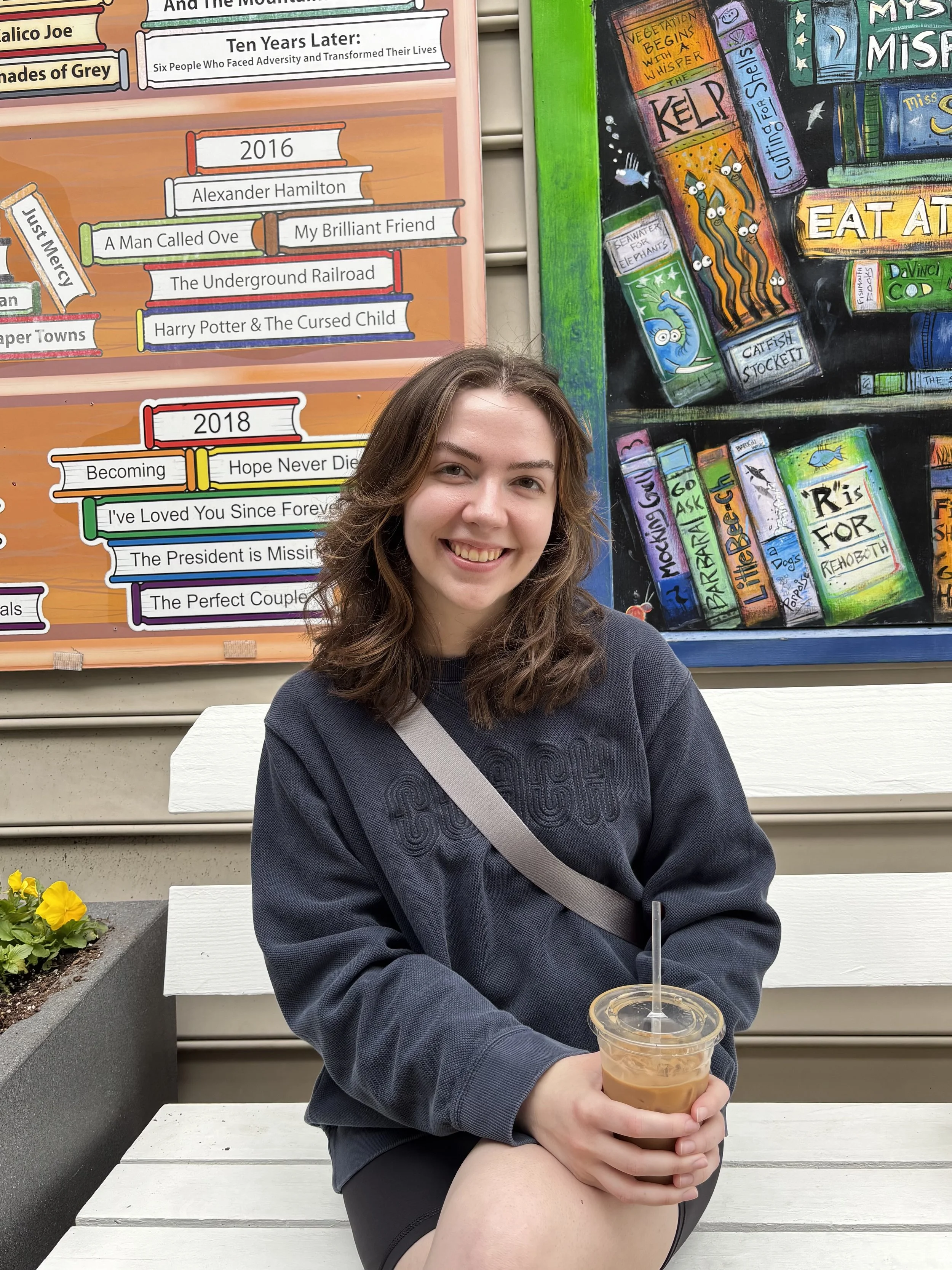
Sydney Weinkam
Sydney Weinkam is a tutoring center coordinator at her local community college. Her work has appeared in Oakland Arts Review and Eunoia Review. She spends her time hiking, cooking, and editing her students’ papers.
-
-
-
-
-
-
-
-
-